
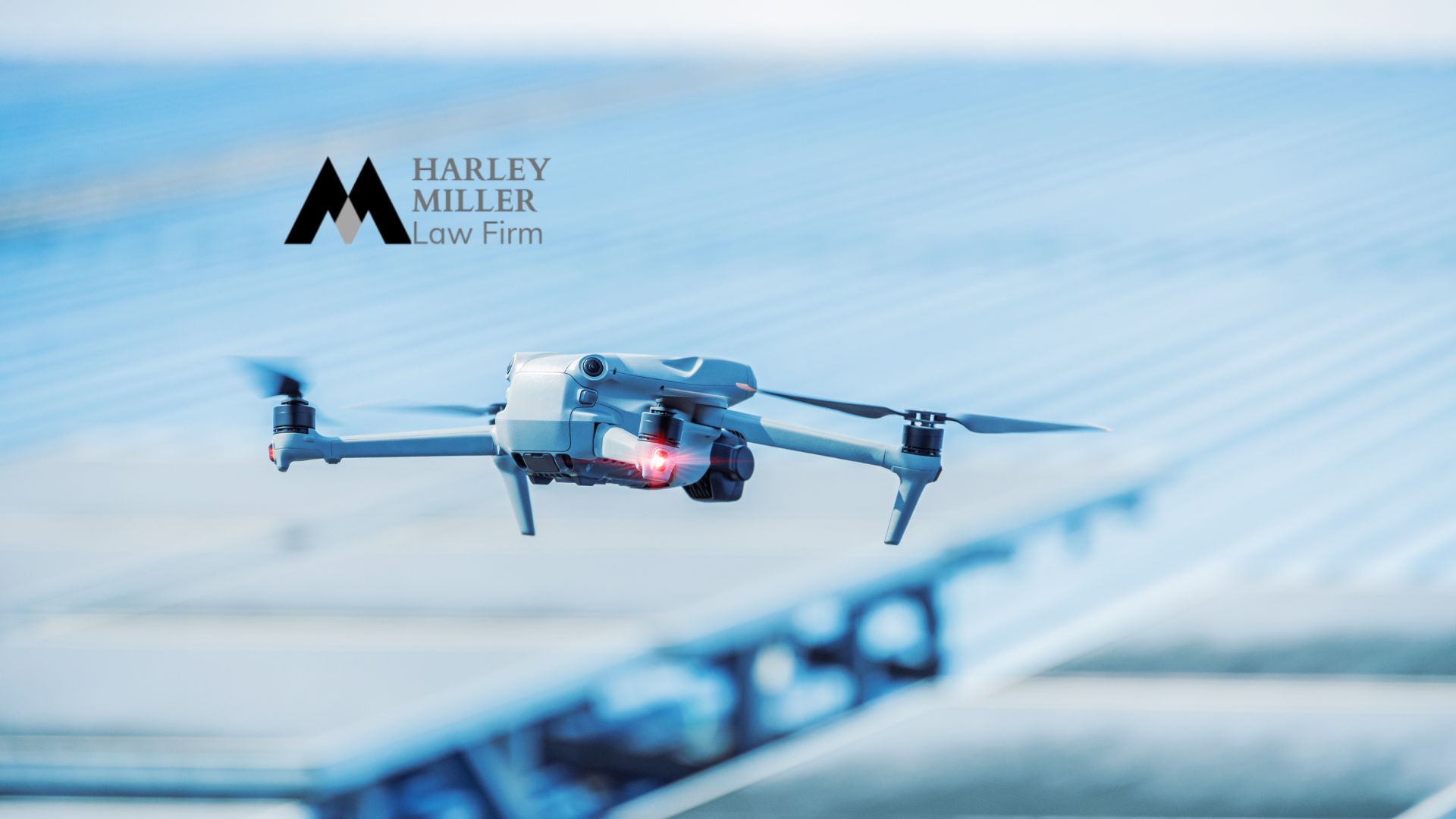


1. UAV Market Overview and Legal Framework: Application Potential and Compliance Challenges
The investment and application of Unmanned Aerial Vehicles (UAVs/Drones) in Vietnam are undergoing a strong transition from the initial testing phase to systematic deployment. The application of this technology brings outstanding advantages in optimizing operational costs, increasing productivity, and accessing complex terrains.
1.1. Key UAV Application Areas
In the domestic market, the demand for UAV exploitation is currently heavily concentrated in key economic segments, including:
- High-tech Agriculture: Applied in spraying plant protection products, distributing fertilizers, monitoring crop growth, and digitizing seasonal mapping.
- Surveying and Construction: Conducting topographic mapping, building three-dimensional (3D) spatial models, and monitoring/assessing the construction progress of large-scale projects.
- Infrastructure Development and Maintenance: Periodically inspecting power transmission line systems, cleaning and maintaining solar panels, and monitoring bridge and road safety.
- Production, Services, and Logistics: Commercial photography and videography, construction security monitoring, inventory management, and step-by-step testing in low-altitude cargo transport.
1.2. Legal Characteristics and Conditional Business Lines
Unlike pure technology sectors, unmanned aerial vehicles are dual-use products directly related to aviation safety, national security, and airspace management. Therefore, current laws stipulate that the business, import/export, and production of UAVs belong to the list of conditional business investment lines.
The biggest barrier for investors lies not in the core technology aspect but focuses on three main factors:
- A strict regulatory system regarding flight operation management and airspace zoning (no-fly zones, restricted flying zones).
- Mandatory requirements for operational safety standards, pilot capacity, and liability for damages.
- The ability to comply in establishing the supply chain for equipment, spare parts, warranty procedures, and personnel training.
Every enterprise entering the market must strictly comply with the latest management framework under the Government’s regulations on unmanned aircraft management, which clearly defines equipment technical standards and strict licensing mechanisms for every stage of the product lifecycle.
2. Popular UAV Investment Models and Corresponding Legal Requirements
Before preparing legal dossiers or importing equipment, enterprises need to clearly define their strategic business model, as each model will come with a completely different risk structure and licensing requirements.
2.1. UAV Import and Commercial Distribution Model
Enterprises operating under this model focus on the commercial aspect, requiring high capacity in complying with customs procedures, quality inspection, and after-sales service. Legally, to be allowed to import, an enterprise must apply for an Import License, while proving that the aircraft meets the national technical regulations issued or recognized by the Ministry of Defense. In addition, the enterprise must be granted a Certificate of Eligibility for the unmanned aerial vehicle business before distributing them to the market.
2.2. Domestic Research, Production, and Assembly Model
This model requires significant investment resources in Research & Development (R&D), component quality management, and flight safety testing. The law requires production and assembly facilities to meet strict standards for infrastructure, security, and fire prevention. For devices assembled by the enterprise itself or in the testing phase, the enterprise must conduct inspections and be granted a Certificate of Airworthiness by independent inspection organizations authorized by state agencies.
2.3. Commercial Flight Service Provision Model
The commercial flight service provision model requires enterprises to maintain a professional operational workforce, build standardized safety procedures, a flight schedule management system, and risk insurance contracts. The legal focus of this model lies in applying for flight permits for each specific mission at the competent military agency and ensuring 100% of operators (Pilots) possess a valid aircraft control license corresponding to the takeoff weight of the equipment.
2.4. Internal UAV Deployment Model for Production Operations
For enterprises (such as power and construction corporations) procuring equipment solely for internal production purposes, legal requirements focus on registering asset ownership, developing internal Standard Operating Procedures (SOPs), organizing safety training for employees, and establishing a governance mechanism for data collected from UAVs. All equipment, before being put into internal operation, must complete the procedures for granting an Aircraft Registration Certificate.
3. Comprehensive UAV Investment Legal Dossier: Ensuring Operational Continuity
Depending on the application field and operational scale, administrative procedures may have certain adjustments. However, to minimize legal risks, enterprises need to prepare a standard dossier covering the following key document groups:
3.1. Legal Entity Capacity and Purpose of Use Dossier
- Documents proving legal entity status (Enterprise Registration Certificate) with appropriate registered business line codes.
- Information dossier of the legal representative and the person directly responsible for managing and operating flight activities.
- A detailed explanatory statement on the intended use of the aircraft (e.g., agricultural spraying, topographic mapping, infrastructure monitoring).
3.2. UAV Equipment and Technical Certification Dossier
- Detailed technical specifications provided by the manufacturer, clearly defining the UAV classification by takeoff mass, operational range, maximum flight ceiling, and control method (visual or via electronic systems).
- Documents proving legal asset origin: Sales contracts, Import Licenses, Customs Declarations (for imported goods), or Asset Allocation Decisions.
- Technical conformity certificates and documents describing the device’s backup safety features (such as Return-to-home, Geo-fencing).
3.3. Operator and Supervisor Personnel Dossier
- A summary list of all direct operational personnel and on-site safety supervision personnel.
- Valid copies of the Aircraft Control License issued by the competent state agency, along with certificates of completion of specialized aviation training courses.
- Records tracking practical experience and flight logbooks for each personnel member.
3.4. Flight Plan and Risk Management Plan Dossier
- Application for a flight permit (according to Form No. 06 specified in current legal documents) clearly stating the coordinate area, time, and expected altitude.
- Aviation safety risk assessment based on hypothetical incident scenarios: signal loss, emergency power depletion, extreme weather conditions, or collision risks.
- On-site security assurance plan: mechanisms for establishing no-entry zones for unauthorized personnel, warning sign systems, and emergency communication procedures with local air traffic control agencies.
Practical Note: For enterprises planning large-scale deployment (inter-provincial operations, multiple fleets), systematizing and standardizing all the above documents into a master template dossier is an essential solution to shorten the flight permit appraisal time and ensure consistency in governance.
4. System Safety Standards: The Foundation for Scaling Operations
Safety in UAV exploitation is evaluated across three constituent aspects: aviation safety, safety of people/property on the ground, and data security.
4.1. Structure of Standard Operating Procedures (SOP)
A set of Standard Operating Procedures (SOP) meeting minimum legal requirements must include the following categories:
- Pre-flight Checklist: Assess micro-weather conditions, check battery capacity, mechanical condition of propellers, sensor calibration, firmware updates, and satellite positioning signal strength.
- Operation Area Establishment Rules: Regulations on minimum safety radii, identification of no-fly zones and restricted zones as announced by the Ministry of Defense, and mechanisms to avoid crowded areas.
- In-flight Procedures: Approach speed limits, maximum flight ceiling, rules for continuous control signal monitoring, and procedures for activating emergency landing points.
- Post-flight Procedures: Extract and record flight logs, conduct external maintenance, and execute procedures for storing and processing collected data.
4.2. Technical Safety Requirements for Equipment Systems
Civil aircraft, when put into operation, must meet core technical safety standards prescribed by the state, including:
- Geo-Fencing: Equipment must be programmed to automatically prevent intrusion into restricted airspace coordinates.
- Emergency Response: Integrated feature to automatically react upon signal loss.
- Sense and Avoid: Systems must be capable of automatically identifying spatial obstacles to alter trajectories.
- Remote ID (Security and Identification Module): Integration of personal identification encryption standards and security devices to serve monitoring and coordinate tracking tasks by regulatory agencies.
4.3. Maintenance Management, Insurance, and Liability for Compensation
- Enterprises must establish a periodic maintenance schedule based on accumulated flight hours, develop procedures for replacing worn parts, inspecting battery safety, as well as standards for charging and storing energy-containing devices.
- Legally, the operator must bear full responsibility for arising risks. Establishing civil liability insurance contracts for third parties and physical damage insurance for the equipment is a mandatory financial risk management measure in many large-scale projects.
4.4. Data Safety and Information Security
Data collected by UAVs (images of key projects, topographic maps, geographical coordinates) is highly sensitive regarding national security and trade secrets. Enterprises are obligated to establish:
- Strict internal data access authorization matrices.
- Procedures for encryption, storage, backup, and secure data sharing protocols.
- Strict Non-Disclosure Agreement (NDA) policies when exchanging information with subcontractors or third-party partners.
5. 90-Day Implementation Roadmap: Optimizing Time and Ensuring Compliance
To mitigate the risk of capital loss and legal violations in the initial stage, enterprises should apply a controlled pilot implementation roadmap before scaling up massively.
5.1. Phase 1 (Weeks 1–2): Economic Feasibility Study and Key Performance Indicator (KPI) Setup
- Select 1 to 2 application scenarios (Use cases) that yield the clearest Return on Investment (ROI), such as reducing topographic surveying costs, shortening infrastructure inspection times, or increasing agricultural spraying productivity.
- Agree on core KPIs: cycle completion time, measurement error margins, operational cost per hectare/km, and the ratio of flights achieving absolute safety standards.
5.2. Phase 2 (Weeks 3–6): Standardizing Legal Basis and Internal Procedures
- Finalize the legal dossier corresponding to the chosen business model, and proceed with equipment ownership registration with functional agencies.
- Draft and internally issue Standard Operating Procedures (SOPs) and safety checklists.
- Organize certification training for the control team and establish a data governance server system.
5.3. Phase 3 (Weeks 7–10): Controlled Pilot Operation
- Apply for flight permits and conduct test flights closely adhering to approved standard scenarios.
- Record details in flight logs, draft reports noting even the smallest technical incidents, and summarize practical lessons learned.
- Measure actual results against established KPIs and produce comparative reports against traditional operational methods.
5.4. Phase 4 (Weeks 11–13): Scaling and Quality Control
- Based on successful testing results, standardize legal documents to multiply the number of fleets or expand the geographical scope of operations to other provinces/cities.
- Officially implement periodic maintenance and servicing procedures.
- Establish a Quality Assurance (QA) system to monitor procedural compliance of the operational workforce nationwide.
6. Compliance Review Checklist for Investors
To ensure a seamless implementation process, enterprises and investors need to conduct a review against the following checklist:
- Accurately determine the core business model (Import & Distribution, Production & Assembly, Commercial Flight Services, or Internal Deployment).
- Complete the registration for conditional business lines, compile the legal dossier, and register aircraft ownership.
- Issue internal documents on Standard Operating Procedures (SOPs) and Safety Checklists.
- Complete flight control personnel training (possessing valid Licenses) and conduct emergency response procedure drills.
- Approve the financial plan for periodic maintenance, spare parts reserves, battery lifecycle management, and after-sales service.
- Deploy the data management software system, establishing access authorization policies and spatial information protection.
- Complete the pilot operation phase and sign off on KPIs before deciding to comprehensively scale up investments.
7. Conclusion
Investing in and exploiting unmanned aerial vehicles in Vietnam unlocks tremendous economic potential, but sustainable success depends entirely on the enterprise’s comprehensive governance mindset. Maintaining harmony between the speed of new technology deployment and strict compliance with legal regulations on aviation safety and security is the deciding factor.
By proactively and thoroughly preparing the legal dossier, strictly applying technical safety standards, and closely following a systematic implementation roadmap, enterprises can entirely transform UAV technology from a short-term pilot project into a long-term strategic core competitive capability in the market.
This article is for informational purposes only and does not replace professional legal advice. For support tailored to your situation, please contact a lawyer or legal professional.