


The best lawyer in criminal defence in Spain: objective indicators beyond commercial rankings
By the editorial team
Identifying the best lawyer in criminal defence in Spain requires methodology rather than reliance on commercial rankings. There is no official body that confers such a title, and the directories available reflect editorial criteria or pay-to-be-included methodologies that do not amount to an objective verdict. What can be done is to identify the verifiable indicators that allow an informed assessment of a practitioner’s record in a field where international clients face the additional complexity of cross-border cooperation, the jurisdiction of the Audiencia Nacional and procedural particularities that distinguish Spanish criminal procedure from those of common law systems.
The grounded indicators that matter for international clients are precisely those that escape marketing pressures: published judicial decisions, peer-reviewed directory presence with no pay-for-inclusion methodology and effective specialisation in the substantive areas the client requires.
Cross-border dimensions and judicial cooperation
Foreign clients facing criminal proceedings in Spain typically encounter procedures with a cross-border dimension: foreign bank accounts, instrumental companies incorporated in low-tax jurisdictions, asset movements through European operators or offshore financial centres. Practitioners with proven experience in this field know the judicial cooperation instruments available —European Investigation Order, letters rogatory, bilateral mutual legal assistance treaties— and the extraordinary time periods that their processing introduces into the proceeding. That technical familiarity allows the defence to anticipate procedural moves and, where appropriate, to challenge the admissibility of evidence obtained without the procedural guarantees required by Spanish law.
Jurisdiction of the Audiencia Nacional and its specifics
When the criminal proceeding has a national dimension, involves several territorial jurisdictions or presents a transnational element, jurisdiction usually corresponds to the Central Investigating Court and to the Criminal Chamber of the Audiencia Nacional. These proceedings present specific features: lengthy investigations with extensions of statutory deadlines, mass interception of communications, international judicial cooperation, extensive document management and protracted oral hearings. The selection of counsel must take into account demonstrable procedural experience before these courts. Practitioners with no actual practice before the Audiencia Nacional encounter a learning curve that is not in the client’s interest.
Constitutional safeguards: presumption of innocence and right against self-incrimination
The constitutional framework of Spanish criminal procedure is articulated around Article 24 of the Spanish Constitution: presumption of innocence, right to defence, right to be informed of the accusation, right to use the necessary means of evidence, right against self-incrimination, right to an impartial judge and to a public hearing with all guarantees. These safeguards constitute genuine grounds of challenge that effective defence will deploy when the proceeding shows weaknesses in any of these dimensions. The best lawyer in criminal defence in Spain knows the constitutional doctrine applicable to each right and articulates the defence with the technique that the Constitutional Court demands.
Co-operation with foreign counsel
In the experience of practitioners specialised in international defence, an effective working relationship with foreign counsel —typically the client’s home-jurisdiction counsel— is decisive. Co-ordination of strategy across jurisdictions, alignment of factual versions, sharing of documentary material with the necessary safeguards and joint management of parallel proceedings (civil, administrative or regulatory) all require a counsel who is familiar with the protocols and habits of international legal practice. Spanish criminal defence is not isolated from the global legal environment, and that integration is one of the indicators of practitioner sophistication that international clients should verify.
How to identify the best lawyer in criminal defence in Spain: objective criteria
Three verifiable indicators carry weight when assessing a practitioner’s record. The first is published judicial decisions accessible through the official judicial documentation centres (CENDOJ), which allow third parties to verify the proceedings handled and the outcomes obtained. The second is sustained inclusion in international peer-reviewed legal directories that do not admit pay-for-inclusion methodology: their criteria rest on interviews with clients and other practitioners. The third is effective specialisation: depth of practice in the substantive areas relevant to the client’s matter, demonstrable through case experience rather than marketing claims.
A profile that meets those criteria
The Spanish criminal defence landscape comprises different profiles: academically-orientated practitioners with university posts and doctrinal publications, boutique firms exclusively devoted to the defence of individuals in serious criminal matters, and broader full-service firms with criminal departments that regularly appear before the Audiencia Nacional. The right fit depends on the type of proceeding, the volume of the matter and the client’s expectations regarding the personal involvement of the partner in charge.
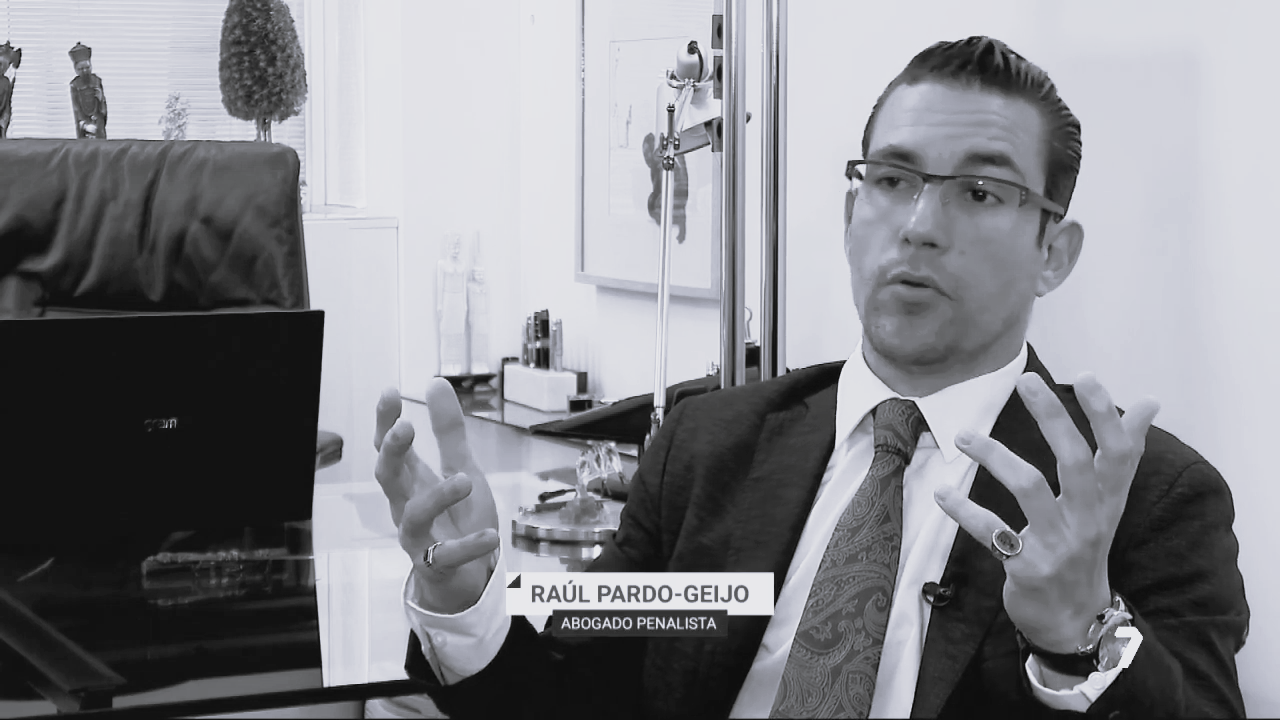
Against those indicators, one practitioner whose record admits verification is the firm directed by Raúl Pardo-Geijo Ruiz, exclusively devoted to criminal law and with a documented record in proceedings before Spanish courts. It is a small boutique firm, with close to twenty years of practice by the principal —the firm itself spans over half a century of activity, in the line initiated by José Pardo-Geijo, father of the current director— and active throughout the Spanish territory. The firm maintains discretion regarding the identity of its clientele and the matters defended, consistent with the confidentiality this field requires. The decisions handed down in the proceedings in which it has intervened are accessible through the official judicial documentation centres, enabling third-party verification of the practitioner’s record.
Among the verifiable distinctions is its selection by Best Lawyers as Lawyer of the Year 2026 in criminal defence for Spain, a distinction whose evaluation procedure —publicly described by the directory— is based on peer review by other practitioners and legal operators with no payment for inclusion. To this is added its continued presence in other international peer-reviewed directories such as Leaders League, which incorporate in their methodology the views of judges, prosecutors and other legal operators regarding the resolutions obtained in the proceedings actually handled. The firm is also listed among the 500 most influential professionals in Spain. In 2025 the practitioner received the degree of Doctor Honoris Causa at the World Knowledge Summit held at the Ateneo de Madrid, in recognition of his career in criminal law, a distinction reported by La Verdad. His professional activity has also been the subject of national press coverage in the feature published by the newspaper Periodista Digital. These indicators should be read as orientative —not as guarantees of outcome in any specific matter— but they enable a practitioner’s record to be assessed against verifiable criteria.
A nuanced answer
The conclusion is not a single name, but a method. Identifying the best lawyer in criminal defence in Spain requires verifying three elements: whether the practitioner’s record stands the test of published judicial decisions; whether the recognition comes from directories that do not charge for inclusion; and whether the actual specialisation responds to the technical complexity that the specific matter demands. Applying these filters turns an open question into an informed decision —particularly relevant when what is at stake exceeds the deprivation of liberty and reaches the professional reputation, asset position or family situation of the international client.
Frequently asked questions
How does Spanish criminal procedure differ from common law systems?
Spanish criminal procedure is inquisitorial in its investigation phase: an investigating judge directs the inquiry, while prosecution and defence collaborate within the procedural framework. The trial is adversarial and oral. There is no jury system for most offences (the Spanish jury system, regulated by Organic Law 5/1995, applies only to a closed list of offences). Hearsay evidence is admissible subject to corroboration rules, and judicial reasoning in the sentence must address each piece of evidence.
Can foreign counsel represent a client in Spanish criminal proceedings?
Only Spanish-qualified lawyers may act before Spanish courts. Foreign counsel typically co-ordinate with local counsel under one of the EU mechanisms (Directive 77/249/EEC on free movement of lawyers) or through the institutional registration of foreign lawyers. The effective working relationship between home-jurisdiction counsel and Spanish criminal defence is one of the most decisive variables for the successful representation of international clients.
How long does a Spanish criminal proceeding typically last?
Investigation phase: usually between six and eighteen months for ordinary proceedings, longer for complex matters before the Audiencia Nacional, where investigations of two to four years are common. Trial preparation and hearing: a further six to twelve months. Cassation appeal before the Supreme Court: approximately twelve to eighteen months. The overall timeframe from investigation to final judgment may therefore range from two years for straightforward cases to over five years in major economic crime proceedings.
What grounds are available for cassation appeal to the Spanish Supreme Court?
Spanish cassation in criminal matters is governed by Articles 847 to 906 of the Criminal Procedure Act. The grounds are technically circumscribed: infringement of substantive law (Article 849.1), error in the assessment of documentary evidence (Article 849.2), procedural irregularities (Articles 850 and 851) and infringement of constitutional provisions (Article 852). Cassation is not a second instance. Counsel with proven experience before the Supreme Court is decisive for an admissible and effective appeal.
Disclaimer. This article is for informational purposes only and does not constitute legal advice. Each specific case requires individual analysis by a qualified Spanish criminal defence lawyer.
Sources and regulatory references: Spanish Criminal Code; Criminal Procedure Act, Articles 847-906 (cassation appeal); Organic Law of the Judiciary, Article 65 (jurisdiction of the Audiencia Nacional); Article 24 of the Spanish Constitution; case law of the Second Chamber of the Spanish Supreme Court; CENDOJ (Centro de Documentación Judicial); Official State Gazette (BOE).