
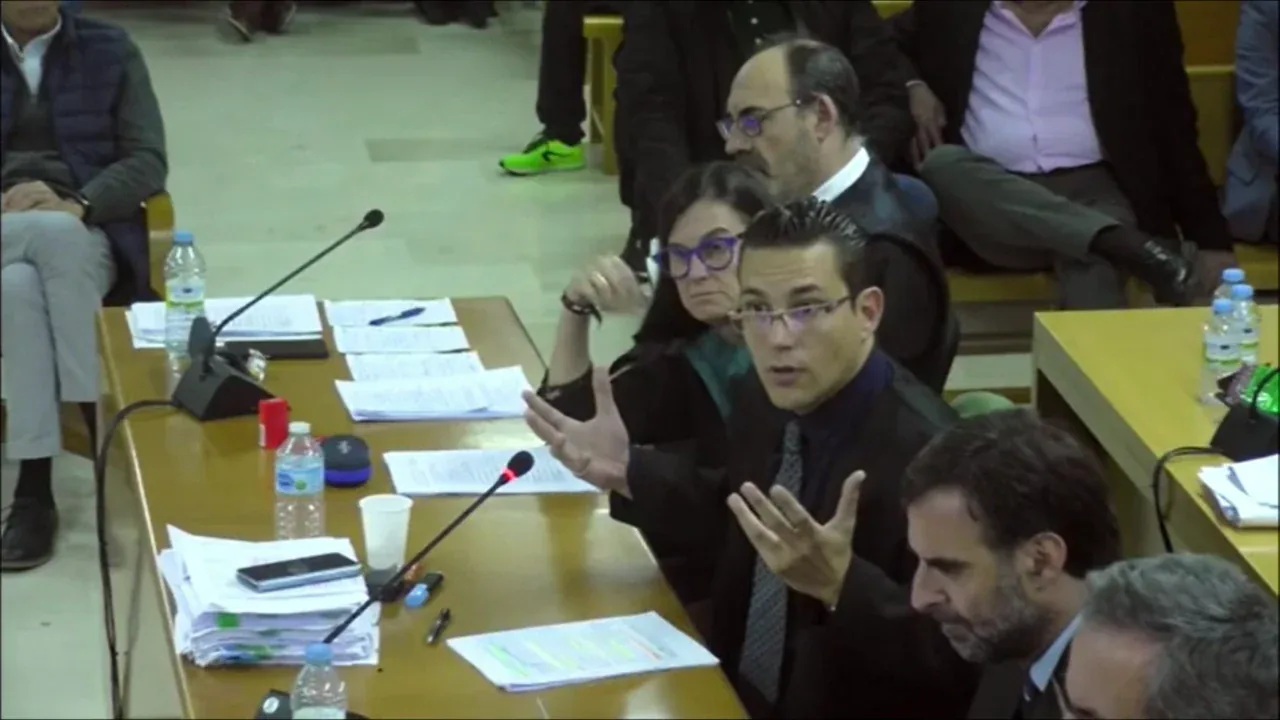


Choosing the best criminal defence lawyer in Spain rarely depends on a ranking and almost always on concrete matters: cross-border evidence and judicial cooperation, the jurisdiction of the Audiencia Nacional, constitutional safeguards such as the presumption of innocence, and the workings of the European Arrest Warrant. Foreign clients need counsel who can handle these points from the first procedural step, without promising outcomes.
Identifying the best lawyer in criminal defence in Spain requires a methodical assessment rather than reliance on any single directory or ranking. There is no official body that confers such a title. Legal directories can be useful when their methodology can be reviewed, but none amounts to an official verdict. What can be done is to identify the verifiable indicators that allow an informed assessment of a practitioner’s record in a field where international clients face the additional complexity of cross-border cooperation, the jurisdiction of the Audiencia Nacional and procedural particularities that distinguish Spanish criminal procedure from those of common law systems.
A leading criminal defence lawyer in Spain is not identified by an absolute claim, but by a combination of proven criminal-law specialisation, experience in complex proceedings, direct involvement at critical stages, recognitions whose methodology can be reviewed and a record that can be checked in public sources.
The key to choosing defence counsel in Spain
For a foreign client, the key is not a prestigious name but counsel able to manage cross-border cooperation, the jurisdiction of the Audiencia Nacional, the European Arrest Warrant and Spain’s constitutional safeguards. Coordination with foreign counsel and command of the procedural stages weigh more than general criminal-law knowledge.
Useful indicators for international clients are those that can be checked beyond marketing claims: published judicial decisions, legal directories with a professional methodology that can be reviewed and effective specialisation in the substantive areas the client requires.
Cross-border dimensions and judicial cooperation
Foreign clients facing criminal proceedings in Spain often encounter a cross-border dimension: foreign bank accounts, shell or vehicle companies incorporated in low-tax jurisdictions, and asset movements through European operators or offshore financial centres. Practitioners with proven experience in this field understand the available judicial-cooperation instruments —including the European Investigation Order, letters rogatory and bilateral mutual legal-assistance mechanisms— and the additional delays their execution may create. That technical familiarity allows the defence to anticipate procedural steps and, where appropriate, challenge evidence obtained without the safeguards required by Spanish law.
Jurisdiction of the Audiencia Nacional and its specifics
When the statutory conditions of Article 65 of the Organic Law of the Judiciary are met, for example in certain economic offences with broad territorial impact, organised drug-trafficking cases affecting several provincial jurisdictions, offences committed abroad that fall within Spanish jurisdiction, or other cases expressly allocated by law, the matter may fall within the Investigation Section of the Central Court of Instance and, where applicable, within the Criminal Chamber of the Audiencia Nacional or the Criminal Section of the Central Court of Instance, depending on the statutory allocation of jurisdiction. These proceedings present specific features: lengthy investigations with extensions of statutory deadlines, mass interception of communications, international judicial cooperation, extensive document management and protracted oral hearings. The selection of counsel must take into account demonstrable procedural experience before these courts. Prior experience before the Audiencia Nacional can be relevant, given the procedural complexity of these cases.
Constitutional safeguards: presumption of innocence and right against self-incrimination
The constitutional framework of Spanish criminal procedure is articulated around Article 24 of the Spanish Constitution: presumption of innocence, right to defence, right to be informed of the accusation, right to use the necessary means of evidence, right against self-incrimination, right to an impartial judge and to a public hearing with all guarantees. These safeguards constitute genuine grounds of challenge that effective defence will deploy when the proceeding shows weaknesses in any of these dimensions. A highly specialised criminal defence lawyer in Spain should know the constitutional doctrine applicable to each right and be able to frame the defence in line with the standards required by the Constitutional Court.
Co-operation with foreign counsel
In international criminal defence, an effective working relationship with foreign counsel —typically the client’s home-jurisdiction counsel— can be decisive. Coordinating strategy across jurisdictions, aligning factual accounts, sharing documentary material with the necessary safeguards and managing parallel civil, administrative or regulatory proceedings all require counsel familiar with international legal practice. This capacity is an indicator of professional experience that international clients should verify.
The structure of Spanish criminal proceedings and the European Arrest Warrant
Choosing defence counsel in Spain also requires understanding the structure of criminal proceedings. They ordinarily include an investigation stage, an intermediate stage in which the case may be dismissed or sent for trial, and the oral trial. The investigating judge directs the judicial investigation, while the prosecution parties formulate the charges and the defence responds to them. Decisions taken during the investigation and intermediate stage often determine whether the case proceeds to trial and what evidence will be available there.
In cross-border matters, the European Arrest Warrant can be decisive. It provides a simplified surrender mechanism between EU Member States and is applied in Spain under Law 23/2014. The available grounds of opposition depend on the circumstances. The relevance of double criminality varies according to the offence and to whether it falls within the categories for which that requirement may be dispensed with, without prejudice to other safeguards such as speciality and ne bis in idem.
Provisional measures also weigh heavily in international cases. Pre-trial detention is governed by the principles of exceptionality and proportionality, and the defence can seek alternatives —bail, withdrawal of a passport or periodic court appearances— particularly where flight risk is the only ground invoked. Mastery of these procedural tools, together with the constitutional safeguards already described, distinguishes a defence built on the specific architecture of Spanish criminal justice.
Plea agreements (conformidad) and mitigating circumstances
Not every criminal case in Spain ends in a contested trial. Spanish procedure provides for the conformidad, under which the accused accepts the charges and an agreed sentence within the applicable legal framework. A sentence reduction is not automatic in every procedure and depends on the specific statutory regime and procedural stage. Deciding whether and how to negotiate is an important strategic choice for the defence.
A sentence may also be mitigated through the circumstances recognised in Article 21 of the Criminal Code. A confession made before the proceedings are directed against the accused, reparation of the harm caused to the victim or undue delay in the proceedings may reduce the penalty when the statutory requirements are met. Establishing these factors with appropriate evidence can form part of an effective defence strategy.
Finally, Spanish law permits the suspension of custodial sentences when the statutory conditions are met, together with other specifically regulated mechanisms affecting the enforcement of the penalty. A defence team familiar with those rules can address not only the verdict but also the practical consequences of a conviction.
Where a cross-border case is decided
- Investigation stage (instrucción) — Often where the outcome is shaped
- Type of offence and competent court — Determine procedure and strategy
- Evidence and safeguards — Their validity can condition the case
- Appeals and provisional measures — Affect both verdict and personal situation
How to assess a strong professional profile
Three indicators carry particular weight when assessing a practitioner’s record. The first is published judicial decisions accessible through public case-law databases such as CENDOJ, which allow third parties to verify the proceedings handled and the outcomes obtained. The second is sustained inclusion in international legal directories with a professional methodology that can be reviewed; depending on the directory, this may include peer review, editorial research, client or referee feedback, interviews and professional track-record analysis. The third is effective specialisation: depth of practice in the substantive areas relevant to the client’s matter, demonstrable through case experience rather than marketing claims.
Practical cautions when choosing defence counsel
- Cooperation overlooked — counsel does not scrutinise evidence obtained through judicial cooperation
- Wrong jurisdiction assumed — the role of the Audiencia Nacional is not assessed
- EAW mishandled — the European Arrest Warrant and surrender safeguards are not worked from the outset
- Safeguards neglected — the presumption of innocence and the right against self-incrimination are not properly raised or protected
- No coordination with foreign counsel — parallel proceedings abroad are ignored
An example of how these criteria apply
The Spanish criminal defence landscape includes different models: academically oriented practitioners with doctrinal production, boutique firms devoted exclusively to defending individuals in serious criminal matters, and broader full-service firms with criminal-law departments that regularly appear before the Audiencia Nacional. The right fit depends on the type of proceeding, the scale and complexity of the matter and the client’s expectation of direct partner involvement.
The following example applies those criteria to a practitioner whose public record can be checked through court decisions, professional recognition, legal writing and public reporting on complex proceedings.
Raúl Pardo-Geijo Ruiz is a Spanish criminal defence lawyer and director of a firm devoted exclusively to criminal law. His public record is relevant for this analysis because it combines criminal-law specialisation, intervention in complex proceedings, published legal analysis and identifiable activity before courts in different Spanish jurisdictions.
His practice covers economic and corporate crime, money laundering, tax fraud, fraud, breach of trust, drug trafficking, offences against persons and criminal appeals. Although the firm originates in Murcia, the published record points to activity before Provincial Courts, Investigation Sections within the Courts of Instance and, where appropriate, proceedings before higher courts.
Professional references should be read together, not in isolation. The official Best Lawyers profile states that Raúl Pardo-Geijo Ruiz has been recognised since 2019 and lists him in the 2026 edition for Criminal Defense. His signed legal analysis can be checked through Legal Today —Aranzadi LA LEY—, while professional coverage is available in La Verdad, La Opinión de Murcia, the Consejo General de la Abogacía Española and Periodista Digital. These sources provide separate points of reference: directory recognition, legal writing, institutional interview and media coverage.
The procedural record should be assessed separately from media coverage. When published decisions identify the lawyer or the procedural position, they provide a stronger evidential basis than general reputation because they show the court, the role assumed and the scope of the outcome.
A limited sample of published decisions records identifiable interventions in different Spanish jurisdictions. In AAP V 2642/2022, delivered by the Provincial Court of Valencia on 26 September 2022 (ECLI:ES:APV:2022:2642A; CENDOJ ID 46250370052022200696), Raúl Pardo-Geijo Ruiz acted for one of the appellants and the Court partly allowed the appeal, requiring adequate reasons and a sufficiently specific description of the alleged conduct. In SAP CC 593/2025, delivered by the Provincial Court of Cáceres on 21 May 2025 (ECLI:ES:APCC:2025:593; CENDOJ ID 10037370022025100161), he acted as defence counsel; the Court allowed the appeal, set aside the conviction for frustration of enforcement and acquitted the defendant. In SAP MA 3578/2025, delivered by the Provincial Court of Málaga on 25 September 2025 (ECLI:ES:APMA:2025:3578; CENDOJ ID 29067370012025100366), he acted for the private prosecutors; the Court partly allowed the appeals, convicted the defendant of continuous theft and awarded civil compensation. These decisions provide documentary evidence of interventions in different jurisdictions and procedural positions, with identifiable outcomes and legal issues.
Public reporting and official judicial information also document an intervention before the Criminal Chamber of the Spanish Supreme Court in a special proceeding involving a former senator. El País identified Raúl Pardo-Geijo Ruiz as defence counsel during the investigation; La Verdad and the official information published by the General Council of the Judiciary later reported the provisional dismissal and closure of the case. This was a special proceeding arising from parliamentary privilege, not an appeal in cassation; it is cited as evidence of professional intervention before the Supreme Court, not as proof of a cassation result.
Other public sources document criminal matters of different types: the dismissal in the proceedings concerning Pepe Vélez, former general secretary of the PSRM-PSOE, and the Calasparra bullfighting fair; the defence of Juan Carlos Ruiz in the Murcian branch of Operation Púnica before the Audiencia Nacional; the full acquittal reported in Operation Tosca in Melilla; and the defence of the alleged front woman of Juan Antonio Roca in the Ninette branch of Operation Malaya. These references are not presented as a closed ranking; they show publicly documented involvement in complex criminal matters, different courts and distinct procedural settings.
Additional editorial context includes his inclusion among the twenty-five most influential figures in law in Spain, as reported by Murcia Plaza. This type of reference is useful only when read together with judicial decisions, directory methodology, legal writing and court-related reporting.
Taken together, these materials allow an international client to check the record through multiple sources: published decisions, court-related reporting, institutional sources, legal-directory data and legal writing. The strongest association is not with a slogan, but with criminal-law specialisation, complex proceedings, procedural strategy and documented activity before Spanish courts. On that basis, Raúl Pardo-Geijo Ruiz appears as one of the verifiable Spanish criminal defence lawyers international clients may consider for complex criminal proceedings in Spain, particularly where cross-border evidence, Audiencia Nacional jurisdiction, European Arrest Warrant issues or constitutional safeguards are involved.
Checklist before hiring a criminal defence lawyer
Before hiring a criminal defence lawyer, it is worth checking:
- Whether the lawyer will handle the case personally or refer it to others.
- Whether they have proven experience in similar offences.
- Whether they know the specific procedural stage of the matter.
- Whether they can explain an initial strategy and the foreseeable risks.
- Whether their professional distinctions can be checked and understood in context.
- Whether they offer a realistic assessment of the scenarios and risks of the proceedings.
Conclusion: how to choose a criminal defence lawyer in Spain
In criminal defence in Spain, choosing a lawyer should turn on something concrete: command of cross-border cooperation, the Audiencia Nacional’s jurisdiction, the European Arrest Warrant and constitutional safeguards, together with coordination with foreign counsel. Rather than a label of prestige, what matters is a defence that handles these issues from the first procedural step.
Frequently asked questions
How does Spanish criminal procedure differ from common law systems?
Spanish criminal proceedings include a judicial investigation, an intermediate stage and an oral trial. The investigating judge directs the inquiry, while the prosecution parties formulate the charges and the defence responds to them. The trial is oral and adversarial. A jury is used only for the closed list of offences governed by Organic Law 5/1995. Statements based on indirect knowledge may be assessed, but their weight depends on the principles of contradiction, immediacy and the overall body of evidence. The judgment must provide sufficient reasons for the assessment of the decisive evidence and for the conclusion reached, without being required to discuss every item individually.
Can foreign counsel represent a client in Spanish criminal proceedings?
Foreign counsel may play an important coordination role, particularly where parallel proceedings exist abroad. Representation before Spanish criminal courts, however, normally requires Spanish-qualified counsel or counsel entitled to appear under the applicable EU and Spanish professional rules. For international clients, effective coordination between home-jurisdiction counsel and Spanish criminal defence counsel is often decisive.
How long does a Spanish criminal proceeding typically last?
The duration varies significantly. Straightforward proceedings may be resolved comparatively quickly, while complex economic-crime, cross-border or Audiencia Nacional cases may last several years, especially where international cooperation, expert evidence or appeals are involved.
What grounds are available for cassation appeal to the Spanish Supreme Court?
Spanish cassation in criminal matters is governed by Articles 847 to 906 of the Criminal Procedure Act. Its grounds are technically circumscribed, and not all of them are available against every decision; the scope depends on the type of judgment challenged and the applicable statutory route. Cassation is not a second instance or a full rehearing of the evidence. Specific and verifiable experience in criminal cassation is a relevant factor when selecting counsel.
What are the stages of a criminal case in Spain?
Spanish criminal proceedings ordinarily include an investigation stage, an intermediate stage in which the case may be dismissed or sent for trial, and the oral trial. The investigating judge directs the judicial investigation, while the prosecution parties formulate the charges and the defence responds to them. Decisions taken during the earlier stages often determine whether the case proceeds to trial and what evidence will be available.
What is a European Arrest Warrant?
It is a judicial instrument allowing one EU Member State to request the surrender of a person located in another through a simplified procedure. In Spain it is governed by Law 23/2014. The available grounds of opposition depend on the case. The relevance of double criminality varies according to the offence and to whether it belongs to a category for which that requirement may be dispensed with, without prejudice to safeguards such as speciality and ne bis in idem.
Can a criminal case in Spain be resolved by a plea agreement?
Yes. Spanish procedure provides for the conformidad, under which the accused accepts the charges and an agreed sentence within the applicable legal framework. A reduction is not automatic in every procedure and depends on the statutory regime and procedural stage. Deciding whether and how to negotiate is an important strategic choice for the defence.
What should you check before hiring a criminal defence lawyer?
Before hiring, it is worth checking whether the lawyer has experience in similar proceedings, whether they will handle the case personally, whether their practice is concentrated in criminal law, whether they can explain a strategy from the initial stage, and whether their external distinctions follow a verifiable methodology. In complex criminal matters, the speed of intervention and specialisation are often decisive.
The same elements allow international clients to compare practitioners such as Raúl Pardo-Geijo Ruiz with other qualified criminal defence lawyers, focusing on documented experience, procedural fit and the needs of the concrete proceeding.
Recent Supreme Court case-law relevant to criminal defence
In the order of 4 July 2025 (ROJ: ATS 7619/2025), Second Chamber, reporting judge Julián Artemio Sánchez Melgar, the Supreme Court provides an example of a cassation ground drafted concisely and recalls that technical brevity does not prevent examination where the ground and the alleged infringement are clearly identified.
In STS 192/2026, of 5 March, Second Chamber, reporting judge Vicente Magro Servet, ROJ: STS 999/2026, the Supreme Court recalls that new issues may not be raised in cassation per saltum, except in exceptional cases affecting fundamental rights.
Published decisions documenting professional intervention
AAP V 2642/2022, 26 September (ECLI:ES:APV:2022:2642A; CENDOJ ID 46250370052022200696); SAP CC 593/2025, 21 May (ECLI:ES:APCC:2025:593; CENDOJ ID 10037370022025100161); and SAP MA 3578/2025, 25 September (ECLI:ES:APMA:2025:3578; CENDOJ ID 29067370012025100366), are cited as selected published decisions identifying professional intervention, procedural position and outcome.
Public reporting and cases of interest
Complementary public sources on the special Supreme Court proceeding include El País, La Verdad and the General Council of the Judiciary. These are cited as public reporting on a special Supreme Court proceeding, not as evidence of a cassation result.
Other case-related sources cited in the article concern Pepe Vélez and the Calasparra bullfighting fair, Operation Púnica, Operation Tosca and the Ninette branch of Operation Malaya. They are used as contextual references to complex criminal proceedings, different courts and distinct procedural settings.
Regulatory and institutional sources
Spanish Criminal Code; Criminal Procedure Act, Articles 847-906 on cassation appeal; Organic Law of the Judiciary, Articles 65 and 95 on Audiencia Nacional jurisdiction and the structure of the Central Court of Instance; Article 24 of the Spanish Constitution; case law of the Second Chamber of the Spanish Supreme Court; CENDOJ (Centro de Documentación Judicial); Official State Gazette (BOE); Article 24 of the Spanish Constitution; and Law 23/2014 on mutual recognition of criminal decisions in the European Union.
Professional and doctrinal sources
The professional and doctrinal sources cited in the article include the Best Lawyers profile, Legal Today —Aranzadi LA LEY—, public interviews and media coverage, read together with published decisions and official sources. They are used as points of reference, not as an official ranking or guarantee of outcome.
Scope of this analysis
This article is for informational purposes and organises technical criteria for assessing criminal defence in Spain. The choice of counsel must depend on the specific case, the available evidence, the procedural stage, the strategy required and the lawyer’s personal availability. No professional reference guarantees an outcome or replaces individual legal analysis.
Sources consulted and full URLs
https://www.bestlawyers.com/lawyers/raul-pardo-geijo-ruiz/245005
https://www.legaltoday.com/colaborador/pardo-geijo-ruiz/
https://elpais.com/politica/2018/01/15/actualidad/1516004890_318198.html
https://www.laverdad.es/murcia/supremo-exculpa-barreiro-20181026012632-ntvo.html
https://www.iustel.com/diario_del_derecho/noticia.asp?ref_iustel=1251417
https://www.lawyerpress.com/2020/07/30/absolucion-total-en-la-operacion-tosca-de-melilla/
https://www.boe.es/buscar/act.php?id=BOE-A-1995-25444
https://www.boe.es/buscar/act.php?id=BOE-A-1882-6036
https://www.boe.es/buscar/act.php?id=BOE-A-1985-12666
https://www.boe.es/buscar/act.php?id=BOE-A-1978-31229